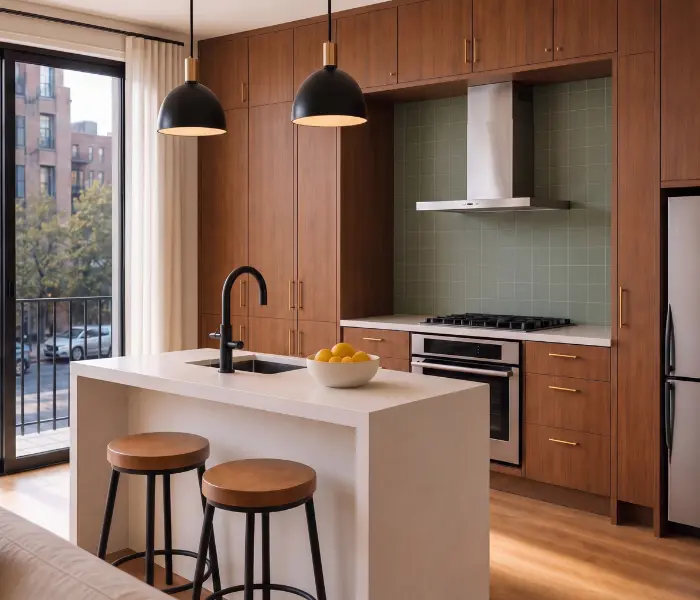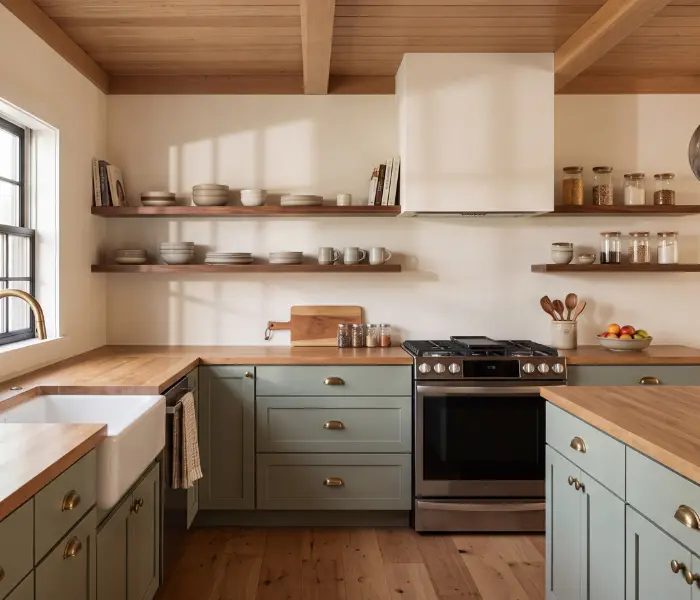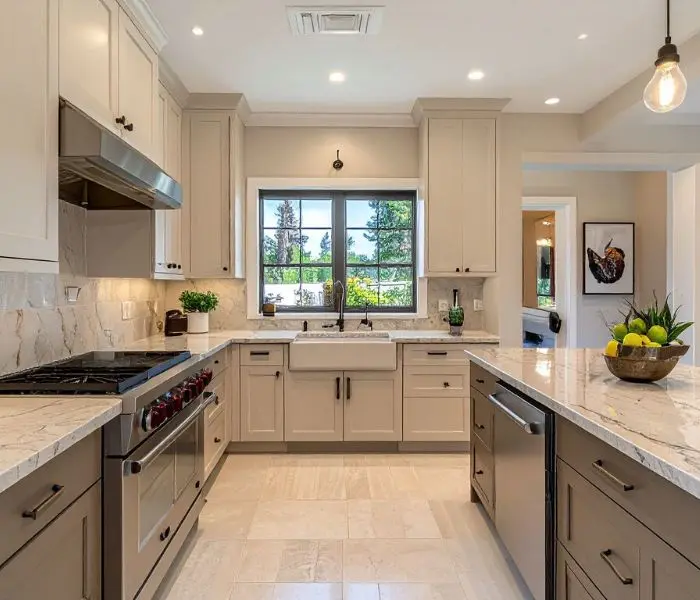
Choosing kitchen cabinets and countertops is an important part of any kitchen remodel. These two elements cover a significant amount of visual space, so selecting colors, materials, and finishes that complement each other can make your kitchen feel more cohesive and inviting.
You do not have to choose matching cabinets and countertops. In many cases, creating contrast between the two can add depth and personality. The key is finding a combination that works with your kitchen style, lighting, and overall color palette.
1. Start With Your Kitchen Style
Before choosing materials, decide on the overall style you want for your kitchen. Modern, traditional, transitional, farmhouse, and rustic kitchens all offer different opportunities for combining cabinets and countertops.
For example, sleek cabinets with minimal hardware and a simple quartz surface can work well in a modern kitchen. Traditional kitchens may benefit from Shaker cabinets paired with granite or marble-look countertops.
If you prefer a warm and natural space, wood cabinets with stone countertops can create a comfortable rustic or farmhouse-inspired look.
2. Decide Which Element Should Stand Out
One of the easiest ways to create balance is to decide whether your cabinets or countertops will be the main focal point.
If your cabinets have a detailed design or strong wood grain, consider choosing a countertop with a more subtle pattern. This allows the cabinetry to remain the primary feature.
On the other hand, if you choose simple white or gray cabinets, you can use a countertop with noticeable veining or texture to create visual interest.
3. Consider Cabinet and Countertop Colors
Color is one of the most important factors when choosing kitchen cabinets and countertops. The colors do not need to be identical, but they should complement one another.
White cabinets are extremely versatile and can work with white, gray, black, beige, or marble-look countertops. Natural wood cabinets pair beautifully with neutral stone or quartz surfaces.
Gray cabinets can be combined with white countertops for a clean appearance, while darker cabinets often look best with lighter countertops that provide contrast.
4. Think About Contrast
Contrast can prevent your kitchen from looking flat or overly uniform. A light cabinet with a dark countertop creates a bold appearance, while dark cabinetry with a light countertop creates a more balanced and open feel.
You can also create subtle contrast by combining different shades of the same color. For example, light gray cabinets can be paired with a slightly darker gray countertop for a sophisticated monochromatic design.
The amount of contrast you choose should depend on your personal style and the amount of natural light in the kitchen.
5. Match the Undertones
Two colors may look similar but still clash because their undertones are different. Cabinets and countertops can have warm, cool, or neutral undertones.
For example, warm wood cabinets may work better with cream, beige, or warm gray countertops. Cool gray cabinets may look better with crisp white or cool-toned surfaces.
Always compare cabinet and countertop samples together before making a final decision. Viewing the materials side by side can make undertones much easier to identify.
6. Consider Countertop Patterns
Countertops can range from completely solid colors to surfaces with dramatic veining and movement. Your countertop pattern should complement your cabinetry rather than compete with it.
If you have highly detailed wood cabinets, a countertop with subtle movement may create a more balanced appearance. Simple Shaker cabinets, however, can provide an excellent backdrop for countertops with stronger patterns.
Marble-look quartz is one option that can add visual interest while maintaining a clean and polished appearance.
7. Think About the Kitchen Island
Your kitchen island gives you another opportunity to combine cabinet and countertop colors. You can use the same materials throughout the kitchen or create contrast on the island.
For example, white perimeter cabinets with a natural wood island can create a warm two-tone design. You could also use a different cabinet finish on the island while keeping the countertop consistent throughout the space.
This approach can help define the island as a focal point without making the kitchen feel disconnected.
8. Coordinate With the Backsplash and Hardware
Cabinets and countertops are not the only elements that influence your kitchen design. Your backsplash, flooring, hardware, lighting, and appliances should also work with your selected materials.
A neutral backsplash can help connect contrasting cabinets and countertops. Similarly, black, bronze, brass, or brushed nickel hardware can provide an additional design detail.
Try to avoid choosing every element independently. Instead, think about how all the finishes will look together.
9. Consider Your Kitchen’s Lighting
Lighting can significantly affect how cabinet and countertop colors appear. Natural daylight, recessed lighting, pendant lights, and under-cabinet lighting can all change the appearance of materials.
If your kitchen receives limited natural light, lighter cabinets and countertops may help make the space feel brighter. In a kitchen with plenty of natural light, you may have more flexibility to use darker finishes.
Whenever possible, view samples under the lighting conditions of your actual kitchen.
10. Choose Materials That Fit Your Lifestyle
Appearance is important, but functionality should also influence your decision. Consider how frequently you cook, how much maintenance you are comfortable with, and how the kitchen will be used every day.
When comparing kitchen cabinets and countertops, think about durability, cleaning requirements, storage needs, and long-term design preferences. A beautiful combination should also be practical for your household.
Find the Right Kitchen Cabinets and Countertops
Choosing cabinets and countertops that work together does not have to be complicated. Start with your preferred style, choose a color direction, consider contrast and undertones, and then coordinate the remaining finishes around those selections.
Whether you prefer a bright modern kitchen, a classic traditional space, or a warm rustic design, the right combination can create a cohesive and timeless result.
Explore our kitchen cabinets and countertops options to find inspiration for your next remodeling project.
At Collaborative Kitchen & Design, you can explore different cabinet styles, finishes, and countertop options to create a kitchen that fits your home, lifestyle, and personal taste.